The Chinese Immigrants On Angel Island Who Went On Strike For Better Food

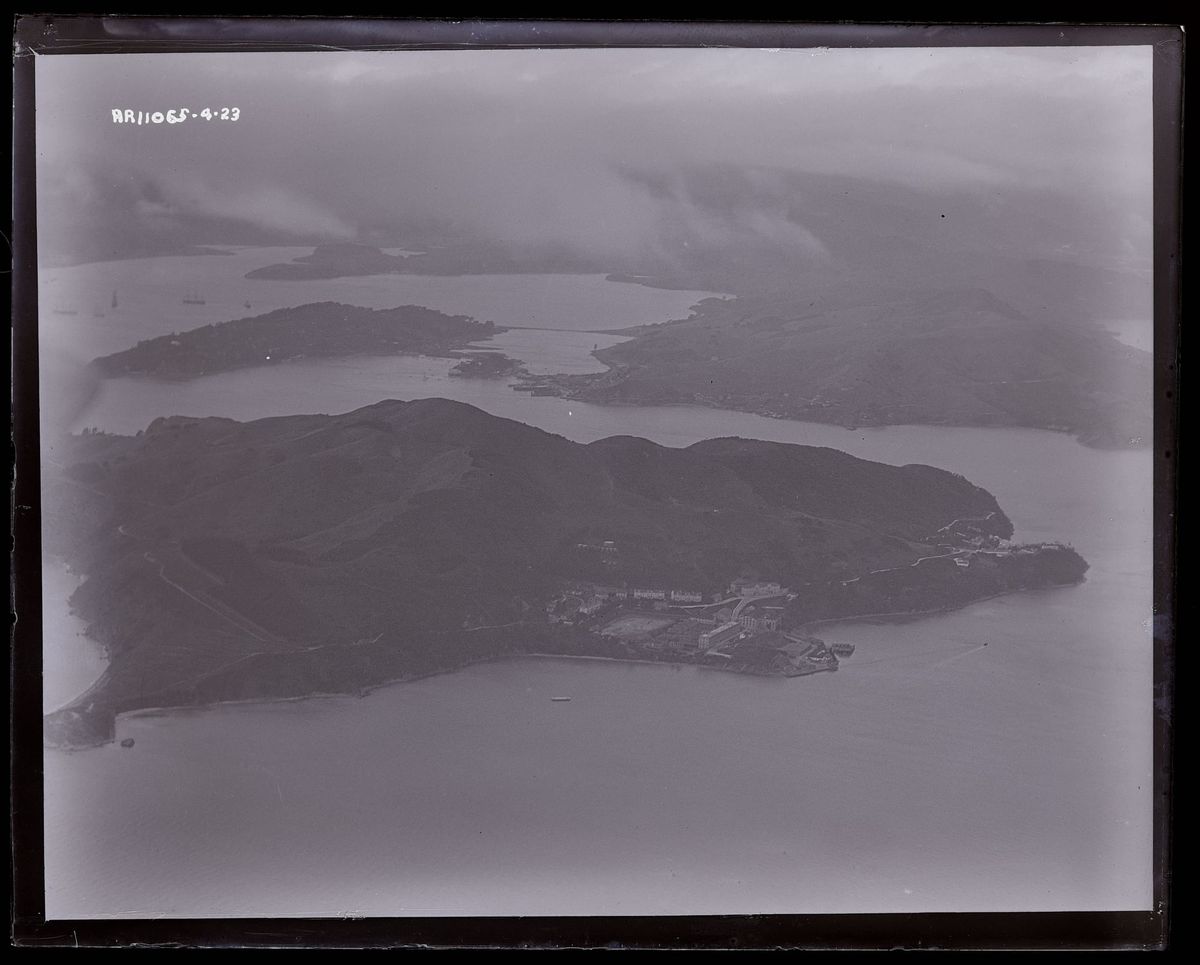
Katie Quan (she/her) is a third-generation Chinese American born and raised on Ramaytush Ohlone land (San Francisco). She is a multidisciplinary artist and Ethnic Studies educator. Her art practice and philosophy is deeply rooted in her community, drawing inspiration and motivation from the 1968 Third World Liberation Strike. She was selected as an Individual Arts Fellow from California Arts Council and Youth Speaks (2023) and AAPI Creative Catalyst Fellow from AAPI Civic Engagement Fund (2025). Katie founded REALSOUL, a curriculum-based arts organization that brings local, intersectional histories into K-8 classrooms. As a new mother, you can find her reading “Homemade Love” for the millionth time, food prepping, and lecturing her daughter about how to fight settler colonialism, patriarchal systems, and corporate greed.
Tiên Nguyễn: What is your favorite story to tell about Asian American history?
I always like to focus on local history. My favorite Asian American story to tell takes place on Angel Island immigration station. It’s off the coast of San Francisco. Between 1910 to 1940, nearly 900,000 people came to the U.S. per year from all over the world, including India, Japan, Russia, Philippines, Asia.
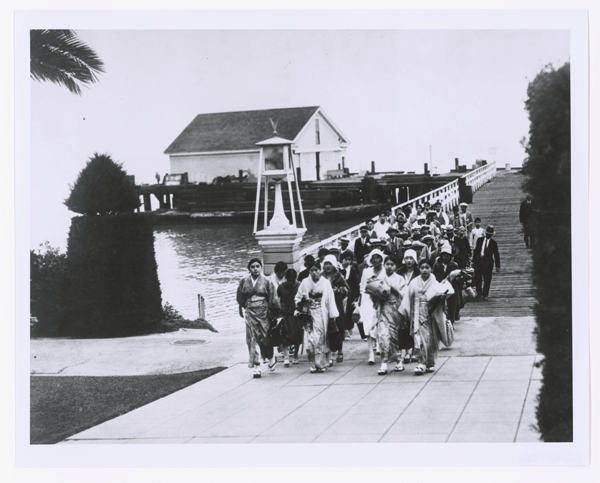
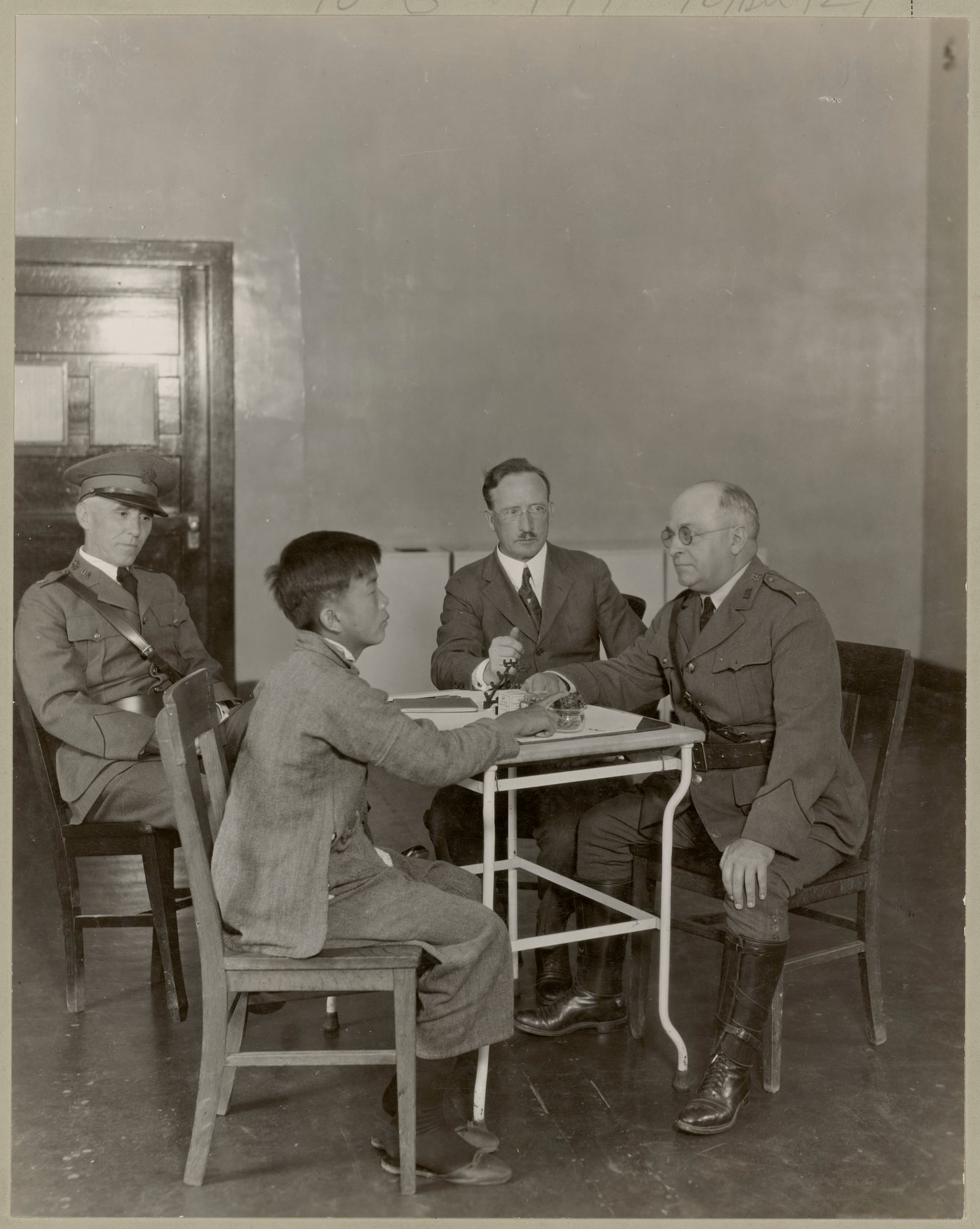
So when you come to the island, you are separated by race, by class and by gender. And then you have to go through intense interrogations, you have to go through medical checks, all of these different things. And for Chinese, the average stay, I believe, was about 2 to 3 weeks. There were a couple of cases where they were here for years, on the island itself.
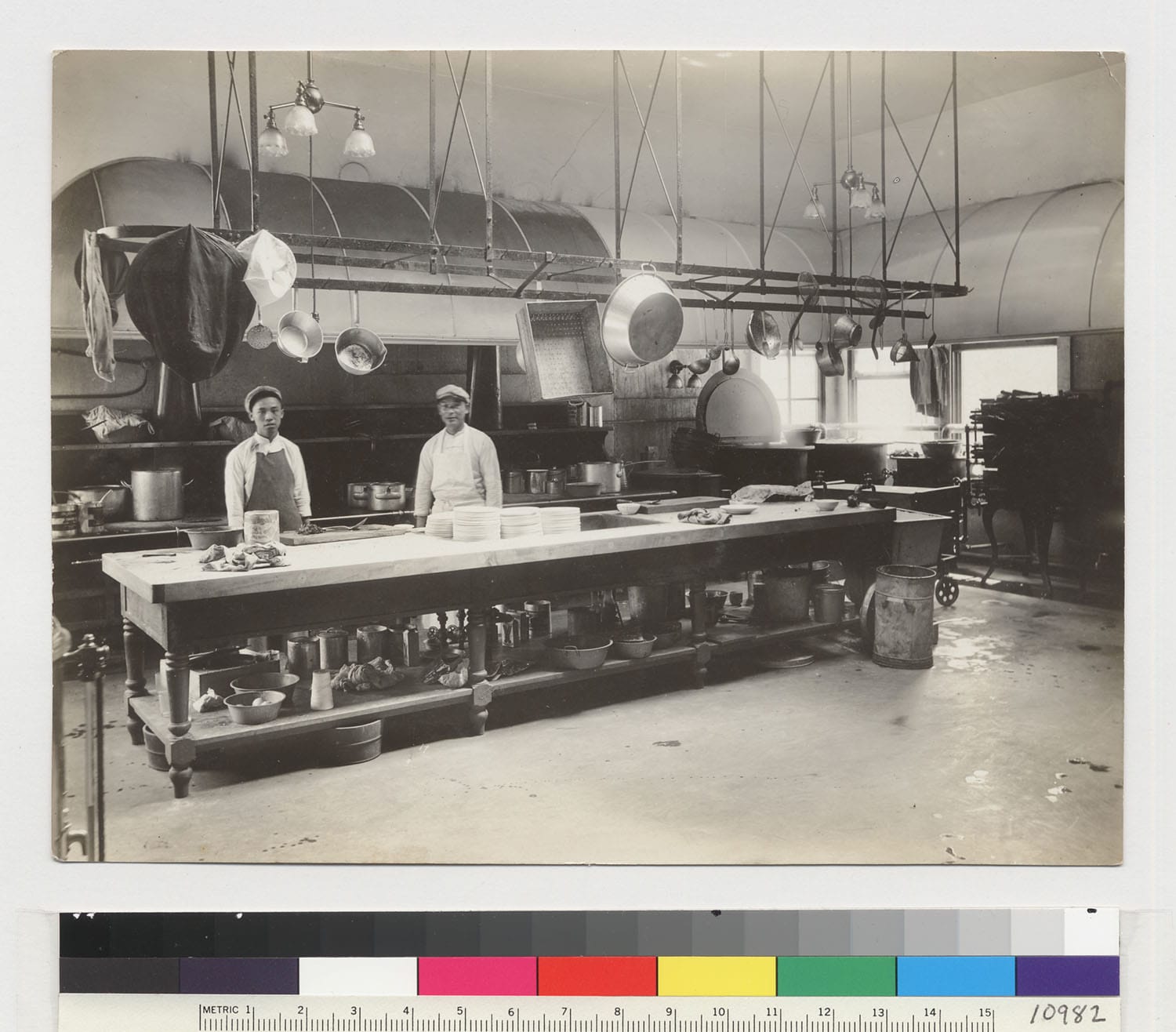
Dining rooms were also separated by race, class and gender. That separated the Asian immigrants from the European immigrants. And so from table settings to food, white immigrants oftentimes experience better conditions than Asian ones. And this is not a huge surprise. But then also the restaurant was modeled off of Ellis Island which usually served European immigrants. And that said, they also had separate menus for Europeans and for Asians.
The government had contracted about 3000 meals a day to the lowest bidding. White contractors who then hired Chinese staff to be like, you know, what's the cheapest way you can get food for your people, supposedly. And it costs about $0.33 a day to feed one Asian person and $0.45 to feed a European, which is about $10 to $15 today.
The Asian immigrants were eating a lot of rice. Kind of like anything that was super cheap and very easy to get. But also they would have to get the oldest of the different things, like rice and vegetables and stuff like that. Not very tasty.
So on New Year's Eve in 1920, 260 Chinese staged a seven day strike over the quality of food. To the point that this restaurant steward actually had to whip out his gun when they refused to eat. And it was also making the station lose about $90 a day.
Wow, there's so much resonance in that story with what's happening today. There was recently a hunger strike by detainees at Adelanto, an ICE detention center, to protest the poor conditions. Just to clarify, how were the Angel Inland strikers making them lose $90 a day?
Yeah. They had a cafeteria where they would be able to have food. But oftentimes if that didn't make them full enough or they wanted something else, then there was also an additional shop. And so pretty much you have 260 people who are refusing to buy anything from the shop. It got to the point that was distressing for people who need to make money off of the things that are kind of coming in.
So this boycott ran about seven days. And pretty much a few days into this boycott, it actually was temporarily paused because newly arrived Chinese immigrants had come in and they were broke the fact that there wasn't any money kind of coming in until the other detainees told them.
The Chinese in general were very well organized, between being on the Island, to being in San Francisco and really utilizing the legal system to fight back.
After 1 or 2 boycotters were released, eventually they went to San Francisco Chinatown and made purchases.They sent over eight boxes of oranges, tobacco, and other things to the island. The restaurant steward was, of course, really upset about this because they're not buying stuff from the shop.
He refused to let this happen, so he confiscated those items. And by the seventh day, the Chinese, the restaurant steward and then the immigration, commissioner got together and they had discussed those 14 points. And that's when that boycott came to an end. There's a newspaper article that really kind of details everything.
Then five years later, Chinese were upset again, you know, new detainees wanting better food. There was one day where they broke all the dishes and went on a three day hunger strike. To the point that soldiers had to come in with bayonets to threaten the more than 125 protesters.
All these stories I really love because they really show that at the most desperate of times, it shows that people had the will to fight for better conditions, fight for better food. They're just fighting for better ways of life, pretty much.
What was drawing all of these immigrants to the US in that period?
During this time, the U.S. was going into different countries, and to essentially become imperialists. For example, in the 1880s they were in the Philippines. You also have the Opium War, specifically.
And so the U.S. and other imperialists are in all these different spaces in Asia, which oftentimes, you know, exacerbates the issues that are happening in those spaces. You have the collapse of China that's happening. People are in famine. People are really desperate to have a better quality of life.
And the US is saying, “We have gold, we have a lot of resources for people. We have work. You can make money. You can have families, all of these different things” sort of like very propaganda things. People are getting very excited. They're calling the US “Gam Saan” in Cantonese, which means Gold Mountain, so people are imagining the streets that are paved with gold.
They came to the US with these high expectations, and that's not what happened. Many of them probably died in poverty. A lot of them probably died being chased out of towns, there used to be thousands of Chinatowns in the US, and now we really only have, like, maybe a handful.
So what happens to Angel Island? Does it get shut down by the 1940s?
It does get shut down. Partly because it was too expensive to run everything. On the Island, you have to have all the boats coming to and from. And that was just too expensive.
By the 40s, they actually re-utilize it to detain Japanese Americans during World War two. And so if you go to the island, you can actually see a museum exhibition about that.
That’s terrible. But I appreciate hearing your story though, because I hadn't heard about the hunger strikes before. You touched on it a bit already but why do you love this story?
Food is life. It might sound like a simple story where people aren’t getting nutrition, but there’s so many more layers to it.
To add onto these layers, the workers there are Chinese cooks who are being contracted by white management who want the cheapest labor. They’re hoping with dirt cheap Asian food, that Asian immigrants will be satisfied. But there are also people who are working in the kitchens who are sympathetic to the immigrants. And so during this time, you have the interrogations that are happening and they sometimes would pass coaching notes through the kitchens.
They would be wrapped in foil, wax paper, and they'd be hidden in oranges, bananas, cookies, specially made dishes. You know, you have people advocating on both sides. In Chinatown, you have a whole network of people who have already gone through this. They may have people who are highly educated, that are going through the legal system.
You have the Chinese Six Companies who are advocating on behalf of the new immigrants. You also have these advocacy groups, including one group called Gee Gee Wui, a self-governing organization formed by the Chinese to support fellow immigrants.
These groups showed people how to adjust not only on the Island, but then what happens when they go to the mainland? One of the detainees talked about how they were always reminded that they did nothing wrong because the immigration station really was like a prison.
I wonder why these stories of fighting back and resistance in the Asian community seem to get kind of lost?
Asian Americans are still used as the model minority myth.The idea that they've just kind of pulled up their bootstraps and worked hard. That's why they are economically doing well.
In the mainstream, I think we're not told about these stories because it purposely pits communities of colors against each other and props up white supremacy. Then, in our own communities, there's a level of shame that kind of surrounds them. Because especially in Asian countries, it's very top down. And so if you do something wrong that is something to be punished, even if it is going against a system that is working against you.
I feel a strong connection to Angel Island stories because my grandmother actually went through the Island in the late 30s, as a young girl, and she came as a paper daughter. And this is what I've heard because I never talked to her about it, but she lived her life in shame. Partly because she broke the rules. Supposedly she wasn't allowed to come to the U.S. She lied on those papers up front, you know? But it was working within a system that was against you in the first place. And that's what the paper system did.
Paper daughters and paper sons were a system where you would purchase a name in China, from somebody who had said, oh, I have eight, eight sons who were born in the U.S., for example. They would go back to China, they would sell these different names. And then it's your responsibility to remember essentially a whole life that's not your own. In classrooms, I like to say it's as if you go to your best friend's house and you say, okay, I'm going to pretend to be you, I'm going to purchase your identity.
And I'm gonna have to memorize everything about your life and everything about your house and your street and everything like that. So, you know, if you think of sort of your own environment, you know, how many streetlights are there on your street? How many dogs does the person three doors down have from you? And all these questions were meant to trip you up.
Because they didn't want the Chinese to come. It was already a rigged system. And the Chinese had been finding different ways to make their lives better. My grandmother was part of the system. Like I said, she was a very law abiding person. This is what she did in order to make a better life for her family and she never spoke about it.
I'm third generation, so you have to wait generations down for people to sometimes see it as a source of pride. This is how I was introduced to Asian American studies, through her story. I sometimes joke and say, you know, she would have been horrified to know that her story is being shared with other people and here I am putting it as kind of a badge of honor in some ways. But it's because I'm proud. I'm proud that she's done that. And I'm proud that there's so many people who are willing to fight for what's right.
Thank you so much to Katie for sharing this story. If you want to learn more about the hunger strikes at Angel Island, check out this video from the American Chinese Food Show.